Introduction: A lenticular laminate film can make a wedding album cover and a large wall poster feel completely different, even when both carry the same printed image.
Many couples and print planners expect the shimmering 3D look from a sample to appear identical on a hand-held book and on a framed poster. It rarely does, and the reason has less to do with film quality than with viewing distance, image content, and how light lands on the surface. Working through close album viewing, distant poster viewing, image selection for each format, and the light and storage conditions that shape printed color makes the whole decision much easier to plan.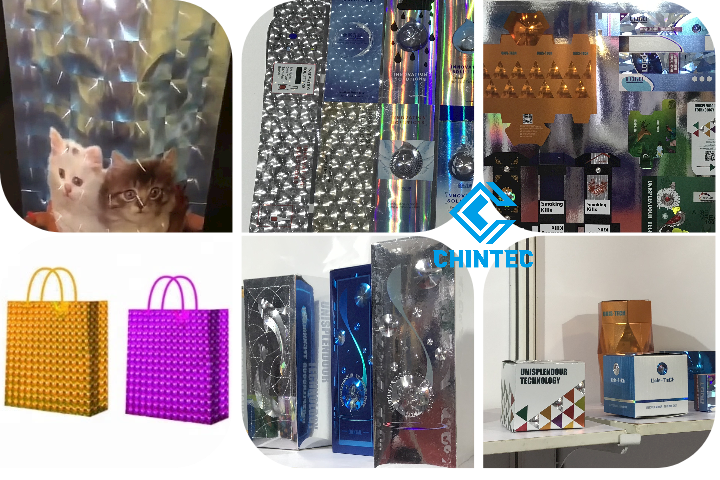
A lenticular surface shows slightly different views depending on the angle at which your eye meets the lens. On a wedding album, the viewer holds the cover 30 to 50 cm away, tilts the book a little, and moves their eyes across a small area. At that range the eye resolves fine surface detail, so the depth shift arrives as a series of small changes: a face lifts, the edge of a bouquet sits forward, the background drops back. The effect is intimate and tied to hand movement. A poster is a different viewing event altogether. The reader stands two or three meters away, often walking past rather than studying. At that distance many lens ridges fall inside a single unit of eye resolution, so the separate views blend into one stronger impression — the depth looks bolder, and the shift happens as the viewer crosses the room. That walking movement supplies the angle change that hand tilting supplies for an album. People often assume the poster's stronger result comes from better material, when the film is identical and only the viewing geometry has changed. Surface reflection decides how much of that effect survives real lighting. A gloss laminate throws back a bright reflection of windows or lamps, and wherever that reflection lands the lens pattern fades underneath it. An album can be tilted away from the light in a second. A poster stays fixed, so its display position — away from direct window glare and near eye level — matters far more than most people expect.
The image does half the work. Lenticular film separates foreground from background, so the picture needs something worth separating. Flat, evenly lit frames packed with detail give the lens very little to work with, while images with a clear subject and real depth layers show the effect immediately. The same photo can also be excellent in one format and weak in the other, which is why album and poster choices are usually made as separate decisions.
An album cover is viewed at arm's length, on a small surface, by people who already know the faces in it. That setting rewards one strong central subject — the couple in close-up, a hand holding a ring, a single flower with crisp edges — and softens competition from background clutter. Cover-scale images with one or two people read best because the eye can follow a shoulder or a veil moving forward against the background. A wide group photo at the same size shrinks faces into small details with little for the lens to lift, so the 3D impression flattens into a general shimmer. Couples choosing a cover image usually do better with the frame that feels slightly too simple.
A poster is read in passing, from a distance where fine detail disappears. Composition here favors large shapes, high contrast, and a silhouette that stays recognizable at three meters — a full-length couple against sky, a profile at the frame edge, a bold arch or floral arrangement. Busy collages and thin typography dissolve at that range, while one strong shape gives the lens a big clean edge to shift. Placement matters just as much: the sweet spot sits near average eye height, and a poster hung too high or too low spends most of its life outside the angle where the depth reads well.
Color is a condition-dependent experience before it is a material property. The International Color Consortium's work on color management exists because the same printed patch appears different under daylight, tungsten, or LED, and because viewing conditions change what people perceive. A wedding album opened in a warm living room and the same album opened beside a bright window can look like two different prints. For posters, the light source is usually fixed by the venue, so checking the actual display spot matters more than checking the file on screen. Long-term change comes from several places at once: the ink, the paper, the film, and the environment the finished piece lives in. Plastic materials respond to heat, moisture, and light exposure, and printed paper takes in and releases moisture with the room. A laminate slows those effects but works as part of a system — film grade, ink chemistry, and the heat and pressure used during lamination all influence the outcome. That is why any responsible answer to "how long will the color last" includes where the piece is displayed and how it is stored. The practical approach is testing rather than assuming. A short sample lamination kept in the real display conditions — the sunlit wall, the humid hallway — tells you more about a specific job than any general statement can. Albums store best closed, flat, and away from radiators and damp cupboards, while posters hold their appearance better framed or rolled under stable conditions than leaning against a hot window. Chintec Plastic Film supplies this lenticular laminate in roll form for paper surfaces, with silver, color-tinted, and patterned options, and the wedding album, poster, and calendar uses listed for reference No. LF22J3D01J are a useful starting point for planning.
Viewing distance changes what a lenticular surface does, and that is the most useful idea to carry into an album cover or poster project. A close-held album rewards simple, well-separated subjects and a surface that can be tilted away from glare, while a poster rewards bold shapes and a display position with a clear angle and controlled reflections. Color persistence belongs to the same conversation, because it depends on ink, film, lamination conditions, and the light and moisture a finished piece lives with. Anyone comparing options from a lenticular film supplier can ask for a sample and check the effect at the distance where the finished piece will actually be seen.
A: At arm's length, the eye resolves individual lens ridges, so depth arrives in small steps as the book tilts in the hands, which is why an album cover feels like a moving, personal effect. Step back across the room and those ridges blend together, the depth impression becomes broader and softer, and the cover reads more like a shifting highlight than a sharp pop. The comfortable range for album covers is roughly 30 to 60 cm, and the effect is strongest when the cover is tilted slightly rather than held dead flat.
A: A poster is viewed from two or three meters, and the viewer usually moves while looking, so the angle sweeps across a wide arc and brings many more lens ridges into view at the same time. The larger printed area also gives the lens bigger shapes and cleaner edges to shift, so the depth change reads clearly at distance. The film itself can be exactly the same as on an album cover; the difference comes from scale, viewing range, and the natural movement of someone walking past.
A: Printed color shifts as ink, paper, film, and environment interact, so the appearance of a laminated album or poster depends on the ink chemistry, the film grade, the heat and pressure used during lamination, and how much light, heat, and moisture the finished piece meets. A sample kept in the actual display conditions gives the clearest picture of how a specific job will age, and storing albums closed and flat and displaying posters away from direct sun keeps that appearance more stable for longer.
About ICC — International Color Consortium
Plastics: A simple introduction - Explain that Stuff